

Reviewed and Validated by: Aakrist Goyal, Associate
Introduction
Understanding the statutory rights and duties of employers and employees is essential for maintaining a balanced and fair workplace.This article explores the rights and duties of employers and employees in India delving into the crucial legal aspects that govern these relationships.
Statutory Rights of Employees in India
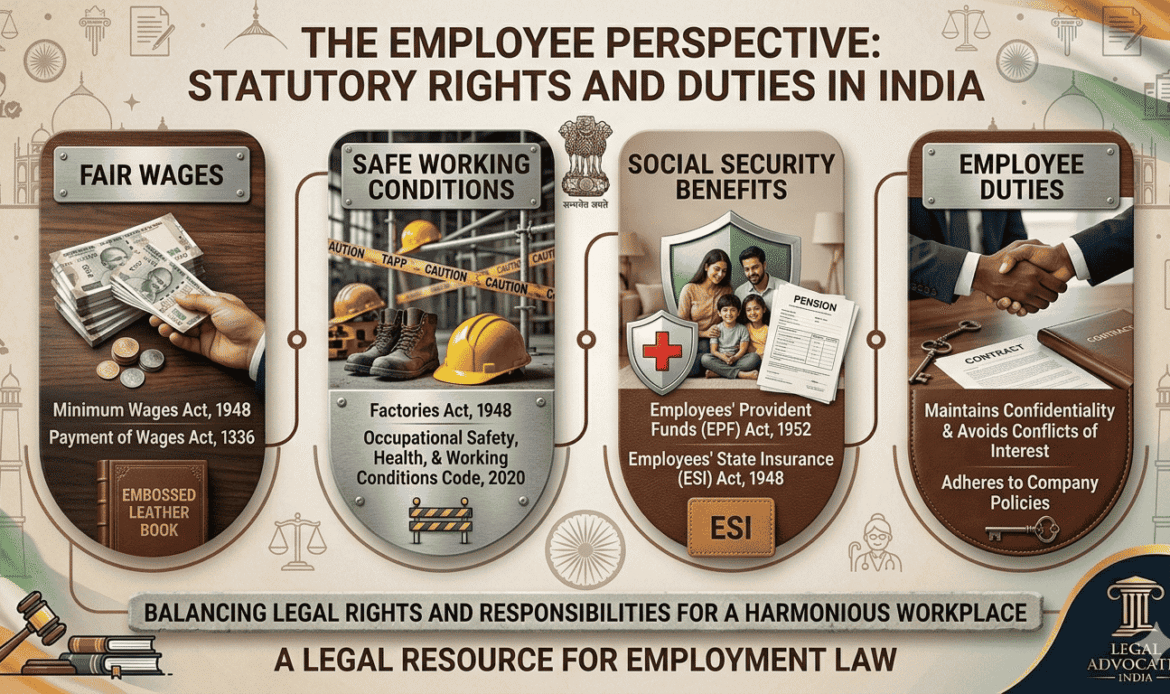
- Fair Wages: Rights under the Minimum Wages Act, 1948, and the Payment of Wages Act, 1936.
- Safe Working Conditions: Provisions under the Factories Act, 1948, and the Occupational Safety, Health, and Working Conditions Code, 2020.
- Social Security: Benefits under the Employees’ Provident Funds and Miscellaneous Provisions Act, 1952, and the Employees’ State Insurance Act, 1948.
Responsibilities of Employees Under Indian Law
- Duty of Loyalty: Maintaining confidentiality and avoiding conflicts of interest.
- Compliance with Policies: Adhering to company policies and procedures.
Read another article: Sample Draft of a Will
Statutory Rights of Employers in India
- Management Prerogatives: Rights to manage, direct, and control the workforce.
- Disciplinary Actions: Authority to take disciplinary actions for misconduct as per the Industrial Employment (Standing Orders) Act, 1946.
Duties of Employers Under Indian Law
- Wage Payment: Ensuring timely and fair payment of wages.
- Health and Safety: Providing a safe working environment and complying with health regulations.
Conclusion
Balancing the rights and duties of employers and employees fosters a harmonious and productive workplace. Legal practitioners must ensure that both parties are aware of their statutory obligations and entitlements.
