

Reviewed and Validated by: Richa Thakur, Associate
Introduction
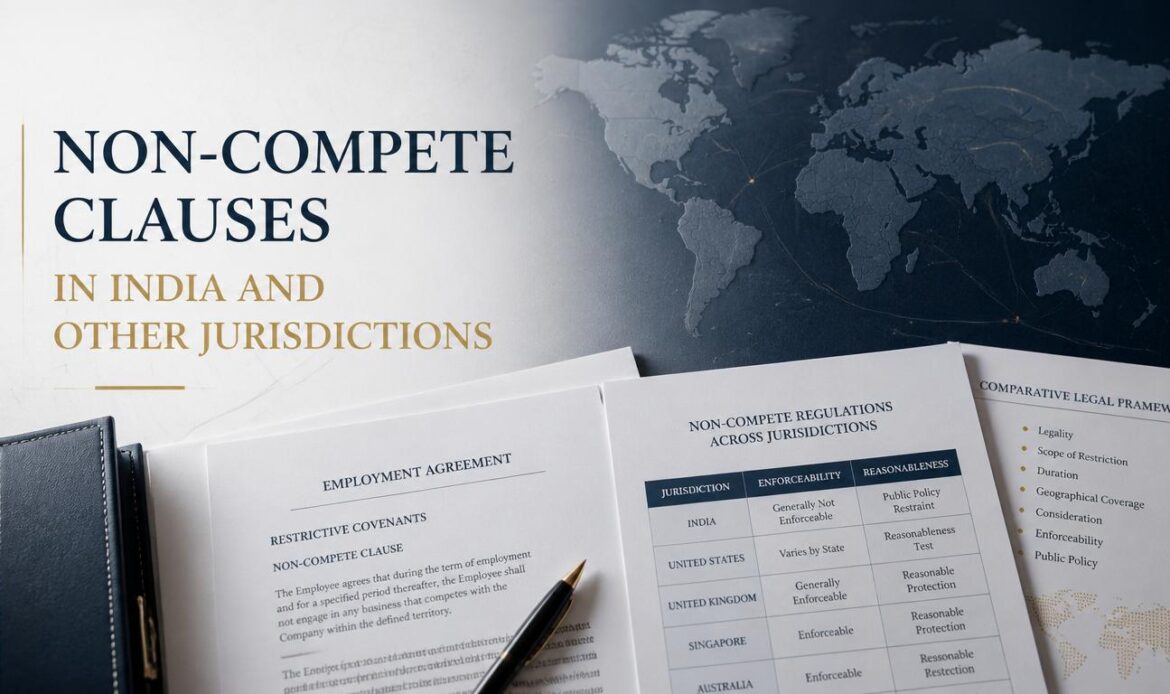
Non-compete clauses vary significantly across jurisdictions, reflecting different legal standards and cultural contexts. This article compares non-compete clauses in India and other jurisdictions, such as the USA and Europe, highlighting key differences and similarities.
Read another article: International Perspectives on White-Collar Crimes and Their Relevance to India
Non-Compete Clauses in India
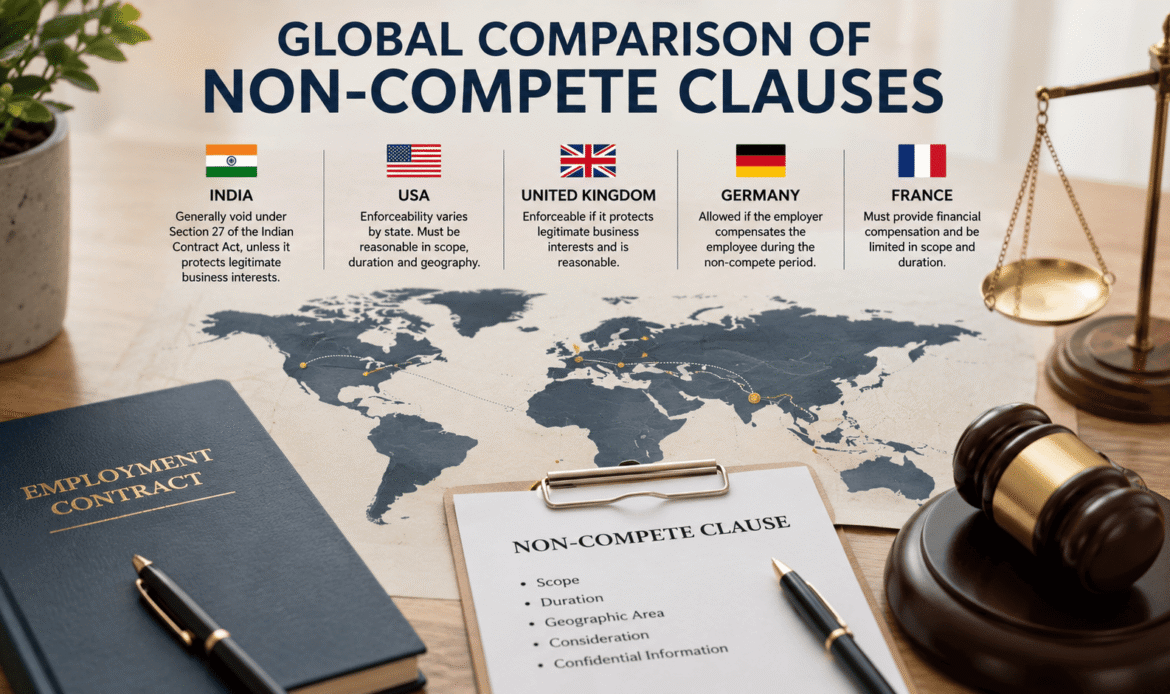
In India, non-compete clauses are governed by Section 27 of the Indian Contract Act, 1872, which generally voids agreements restraining trade. Key points include:
- Void Agreements: Non-compete clauses are considered void unless they protect legitimate business interests.
- Reasonableness: Courts assess the reasonableness of restrictions based on scope, duration, and geography.
- Case Law: Significant cases include Niranjan Shankar Golikari and Superintendence Company of India.
Non-Compete Clauses in the USA
In the USA, non-compete clauses are subject to state laws, resulting in significant variation:
- Enforceability: States like California void non-compete clauses, while others, like Texas, enforce them if reasonable.
- Reasonableness: Courts consider factors such as duration, geographic scope, and the nature of the business.
- Legislation: Recent trends include restrictive covenants legislation aimed at limiting non-compete clauses.
- Case Law: Notable cases include Epic Systems Corp. v. Lewis and the California Supreme Court’s ruling in Edwards v. Arthur Andersen LLP.
Non-Compete Clauses in Europe
European countries have diverse approaches to non-compete clauses:
- United Kingdom: Non-compete clauses are enforceable if they protect legitimate business interests and are reasonable in scope and duration.
- Germany: Non-compete clauses are allowed if the employer compensates the employee during the non-compete period.
- France: Non-compete clauses must provide financial compensation and be limited in scope and duration.
- Case Law: European case laws, such as the Court of Justice of the European Union (CJEU) rulings, provide insights into the enforceability of non-compete clauses.
Key Differences and Similarities
Comparing non-compete clauses across jurisdictions reveals key differences and similarities:
- Legal Standards: The enforceability of non-compete clauses varies significantly, with some jurisdictions imposing stricter standards.
- Compensation: Some countries require financial compensation for non-compete clauses, while others do not.
- Reasonableness: Reasonableness tests are common, assessing scope, duration, and geographical restrictions.
- Employee Rights: There is a global trend towards protecting employee rights and limiting overly restrictive non-compete clauses.
Lessons for Indian Legal Practice
Understanding global trends can provide valuable insights for Indian legal practice:
- Adopting Best Practices: Employers can adopt best practices from other jurisdictions, such as providing fair compensation and transparent communication.
- Legal Adaptation: Indian law can evolve by incorporating global trends and judicial interpretations.
- Employee Awareness: Employees should stay informed about their rights and seek legal advice when faced with non-compete clauses.
Conclusion
Comparing non-compete clauses in India with other jurisdictions, such as the USA and Europe highlights significant differences and similarities in legal standards and practices. Employers and employees in India can benefit from understanding global trends and adapting best practices to navigate the complexities of non-compete clauses effectively. By staying informed about legal developments and seeking legal advice, businesses can draft enforceable non-compete clauses that protect their interests while respecting employees’ rights.
