

Reviewed and Validated by: Richa Thakur, Associate
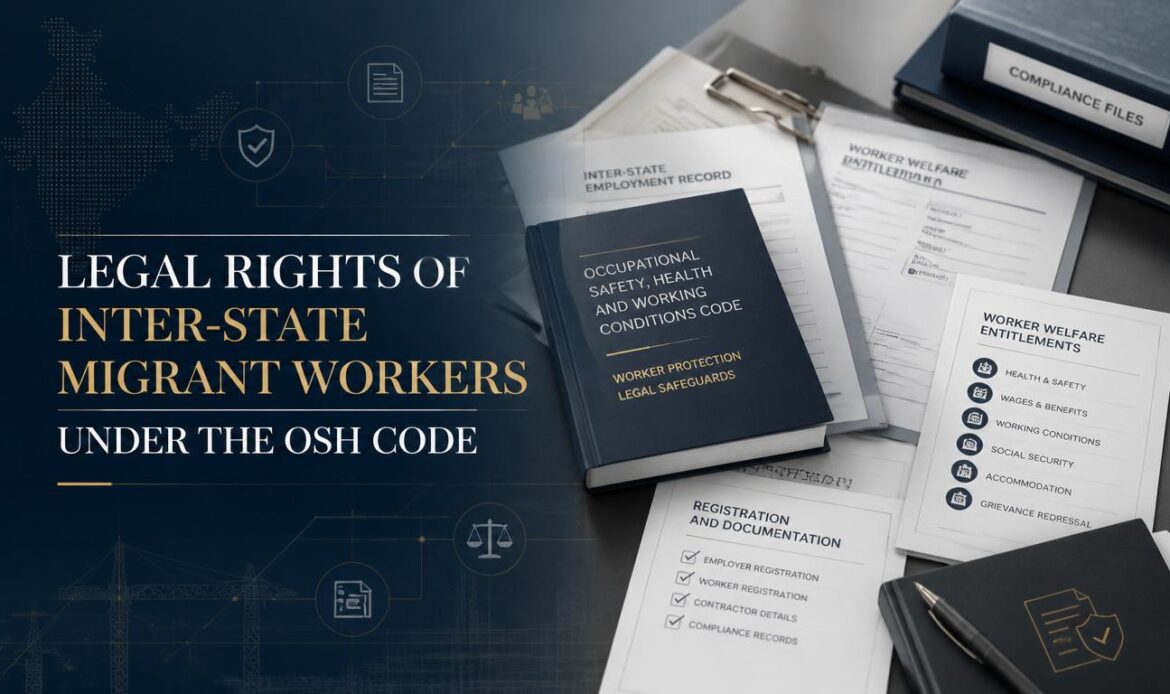
The Occupational Safety, Health, and Working Conditions Code, 2020 (OSH Code), provides various legal rights and protections for inter-state migrant workers in India. Understanding these rights helps in ensuring compliance and promoting the welfare of these workers.
Key Provisions for Inter-State Migrant Workers
- Definition and Coverage: The OSH Code defines inter-state migrant workers as individuals who are recruited by an employer or contractor in one state for employment in another state. The Code covers all such workers and provides various protections and benefits.
- Registration and Identification: Employers and contractors are required to register inter-state migrant workers and provide them with identification cards. This helps in ensuring that workers receive their entitled benefits and protections.
- Wages and Benefits: The OSH Code mandates that inter-state migrant workers receive the same wages and benefits as other workers in the establishment. This includes minimum wages, overtime pay, and other statutory benefits.
- Housing and Accommodation: Employers are required to provide suitable housing and accommodation for inter-state migrant workers. The housing facilities must meet the prescribed standards to ensure the well-being of the workers.
- Travel Allowance: The OSH Code provides for travel allowance for inter-state migrant workers to cover the cost of their journey from their home state to the place of employment and back. This helps in reducing the financial burden on the workers.
- Displacement Allowance: Employers must pay a displacement allowance to inter-state migrant workers to compensate for the inconvenience and expenses incurred due to relocation. This allowance is in addition to the wages and other benefits.
- Grievance Redressal Mechanism: The OSH Code mandates the establishment of grievance redressal mechanisms to address complaints and disputes related to inter-state migrant workers. This ensures that workers have access to justice and fair treatment.

Responsibilities of Employers and Contractors
- Registration and Documentation: Employers and contractors must register inter-state migrant workers and provide them with identification cards. Proper documentation helps in ensuring compliance and addressing any disputes that may arise.
- Equal Treatment: Employers must ensure that inter-state migrant workers receive the same wages, benefits, and working conditions as other workers in the establishment. This includes providing suitable housing, travel allowance, and displacement allowance.
- Grievance Redressal: Employers must establish grievance redressal mechanisms to address complaints and disputes related to inter-state migrant workers. These mechanisms should be accessible and effective in resolving grievances.
- Safety and Health Standards: Employers must comply with safety and health standards outlined in the OSH Code. This includes providing necessary safety equipment, maintaining safe working conditions, and ensuring compliance with prescribed safety measures.
Read another article: Legal Rights of Inter-State Migrant Workers Under the OSH Code
Challenges and Practical Tips
- Awareness and Implementation: Both employers and inter-state migrant workers must be aware of the provisions of the OSH Code and their implications. Regular training and communication can help in better implementation and compliance.
- Workforce Management: Employers should plan for workforce management, ensuring compliance with wages, benefits, and working conditions for inter-state migrant workers. This may include hiring temporary staff or redistributing work responsibilities.
- Support Systems: Providing support systems such as suitable housing, travel allowance, and grievance redressal mechanisms can help in ensuring compliance and promoting the welfare of inter-state migrant workers.
Case Studies and Examples
- Larsen & Toubro (L&T): L&T has implemented comprehensive policies to support inter-state migrant workers, including registration, equal wages, suitable housing, and travel allowance. The company promotes a supportive work environment and ensures compliance with legal requirements.
- Tata Projects: Tata Projects provides various benefits and protections for inter-state migrant workers, including housing, travel allowance, and grievance redressal mechanisms. The company ensures that migrant workers receive fair treatment and statutory benefits.
Conclusion
The OSH Code provides various legal rights and protections for inter-state migrant workers in India. By understanding these provisions and implementing best practices, employers and contractors can ensure compliance and promote the welfare of these workers. These measures help in improving financial security, providing access to benefits, and fostering a positive work environment for inter-state migrant workers.
