

Reviewed and Validated by: Richa Thakur, Associate
Setting fair wage standards is crucial for promoting a fair and inclusive work environment. Understanding the legal guidelines for employers helps in ensuring compliance and providing fair compensation for employees’ labor.
Legal Framework for Wage Standards
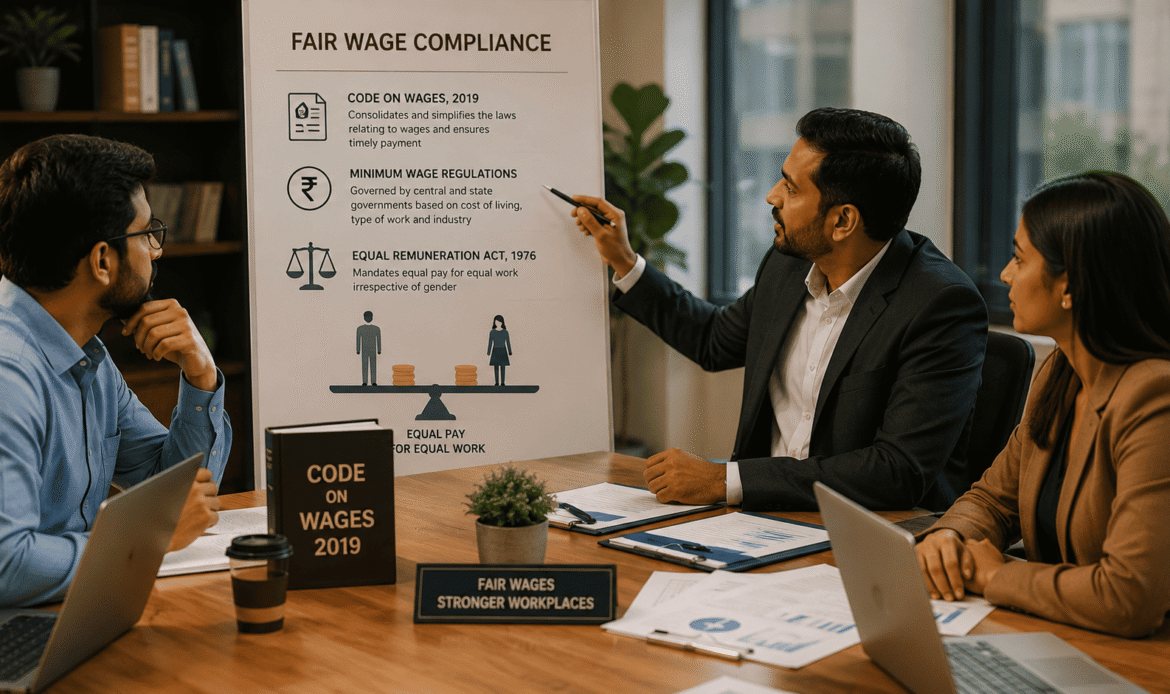
- Code on Wages, 2019: The Code on Wages consolidates laws relating to wages, including the Payment of Wages Act, Minimum Wages Act, Payment of Bonus Act, and Equal Remuneration Act. It mandates the payment of fair wages and aims to ensure uniformity in wage standards.
- Minimum Wage Regulations: Minimum wage regulations are set by the central and state governments based on factors such as the cost of living, type of work, and industry standards. Employers must comply with the minimum wage rates prescribed for their category.
- Equal Remuneration Act, 1976: The Equal Remuneration Act mandates equal pay for equal work, irrespective of gender. Employers must ensure that men and women are paid equally for the same work or work of a similar nature.
Guidelines for Setting Fair Wage Standards
- Determining Wage Rates: Employers should determine wage rates based on factors such as the nature of the work, industry standards, and the cost of living. Wage rates should be reviewed and updated periodically to keep up with inflation and changes in the economy.
- Compliance with Minimum Wage Rates: Employers must ensure that all eligible employees receive at least the minimum wage prescribed by the appropriate government authority. This includes regular review and updating of wage rates based on government revisions.
- Equal Pay for Equal Work: Employers should implement policies that ensure equal pay for equal work, irrespective of gender. This includes conducting regular pay audits to identify and address any disparities in remuneration.
- Transparent Pay Structures: Employers should develop transparent pay structures that clearly outline the criteria for determining wages, bonuses, and other benefits. This helps in promoting fairness and reducing the potential for discrimination.
- Incentives and Bonuses: Employers should provide incentives and bonuses based on performance, productivity, and other measurable criteria. This helps in motivating employees and promoting a culture of excellence.
Read another article: The Impact of Non-Compete Clauses on Employees
Ensuring Compliance with Legal Guidelines
- Accurate Record-Keeping: Employers must maintain accurate records of wages paid to employees, including details such as the amount paid, payment date, and any deductions. Proper documentation helps in ensuring compliance and addressing any disputes that may arise.
- Training and Awareness: Employers should conduct regular training and awareness programs to educate employees and management about wage standards and the importance of compliance. This helps in promoting a culture of fairness and non-discrimination.
- Grievance Redressal Mechanisms: Establishing grievance redressal mechanisms allows employees to raise concerns about wage disparities and non-compliance. Employers should ensure that these mechanisms are accessible and effective in resolving complaints.
Case Studies and Examples
- Tata Consultancy Services (TCS): TCS ensures compliance with wage standards by regularly reviewing and updating wage rates based on industry standards and government regulations. The company maintains accurate records of wages paid to employees and promotes a fair and inclusive work environment.
- Hindustan Unilever: Hindustan Unilever has implemented comprehensive policies to ensure fair wage standards, including regular pay audits, transparent pay structures, and effective grievance redressal mechanisms. The company promotes gender equality and fosters a positive organizational culture.
Conclusion
Setting fair wage standards is crucial for promoting a fair and inclusive work environment. By understanding the legal guidelines and adopting best practices, employers can ensure compliance and provide fair compensation for employees’ labor. These measures help in enhancing employee well-being, improving productivity, and fostering a positive organizational culture.
