

Reviewed and Validated by: Aamna Munaima, Associate
Introduction
Vendor agreements are particularly instrumental in keeping businesses running smoothly and ensuring compliance with the law. Be it when you’re engaging a supplier for raw materials or outsourcing any essential services, a vendor agreement if drafted appropriately, can not only protect your interests but also minimize risks and serve as a clear framework for business relationships. This ultimate guide unpacks essential elements of vendor agreements, critical clauses within vendor agreements, and tips to draft and negotiate vendor agreements.
What is a Vendor Agreement? (Legal Definition & Importance)
Definition of Vendor Agreement. A vendor agreement is a legally binding contract between a business and a vendor (supplier of goods or service provider) setting out the terms and conditions under which the goods or services will be provided. These contracts help establish expectations, responsibilities, and obligations, reducing misunderstandings and disputes. Key use cases for Vendor Agreements
- Raw material procurement: Manufacturers usually sign vendor agreements to ensure a consistent supply of essential materials.
- Outsourcing services: Companies outsource IT services, logistics, or facility management to vendors.
- Software licensing: Companies that license software from third-party vendors require contractual agreements to govern the terms of licensing.
- Event management: This industry involves functioning on vendor agreements for catering, venue rentals, entertainment services, etc.
Types of Vendor Agreements
- Commercial Vendor Agreement: For the commercial sale of physical goods.
- Service Vendor Agreement: A contract for the completion of intangible services.
- Hybrid Agreement: When a vendor offers goods as well as services.
Who is a Vendor?
A vendor is any entity that sells or provides goods or services to another entity in the commercial or business context. These vendors can be individuals, companies, or organizations that offer goods or services that the buyer relies on to conduct business.
Types of Vendors
- Product Vendors: Suppliers who provide physical products like machinery, office supplies, or raw materials.
- Service Vendors: Businesses that provide intangible services like IT support, marketing, or legal consulting.
- Distributors: Vendors who serve as intermediaries, providing products from producers to retailers or end-users.
Role of Vendors in the Supply Chain
Vendors are key links in the supply chain. They ensure operational efficiency for businesses by providing them with timely and quality supplies. An abuse of company resources leads to companies facing delivery delays, increased costs, and a never-ending stream of customer complaints.
How to Write a Vendor Agreement (Step-by-Step Legal Guide)
Vendor agreements are crucial to set clear terms and mitigate a potential dispute. Here is a step-by-step approach on how to write a vendor agreement as well as why you need it:
How to Create a Vendor Agreement in Steps
- Parties: State the full legal names of both the buyer and the vendor.
- Outline the Scope of Work: Provide a detailed description of the goods or services being offered, including quantity, specifications, and timelines.
- Payment Terms: Write down the price agreed upon, when and how to pay, and the late payment fees.
- Identify Delivery Terms: Specify delivery lead times, location of service, and acceptance procedures.
- Include Legal Provisions: You will need to include important legal provisions that relate to confidentiality, indemnification, and dispute resolution.
- Define End-Terms: Outline when either party can terminate the agreement.
In Indian law types of contracts, detailed information can be found here Types of Contracts in Indian Law.
Why Businesses Need Vendor Agreements?
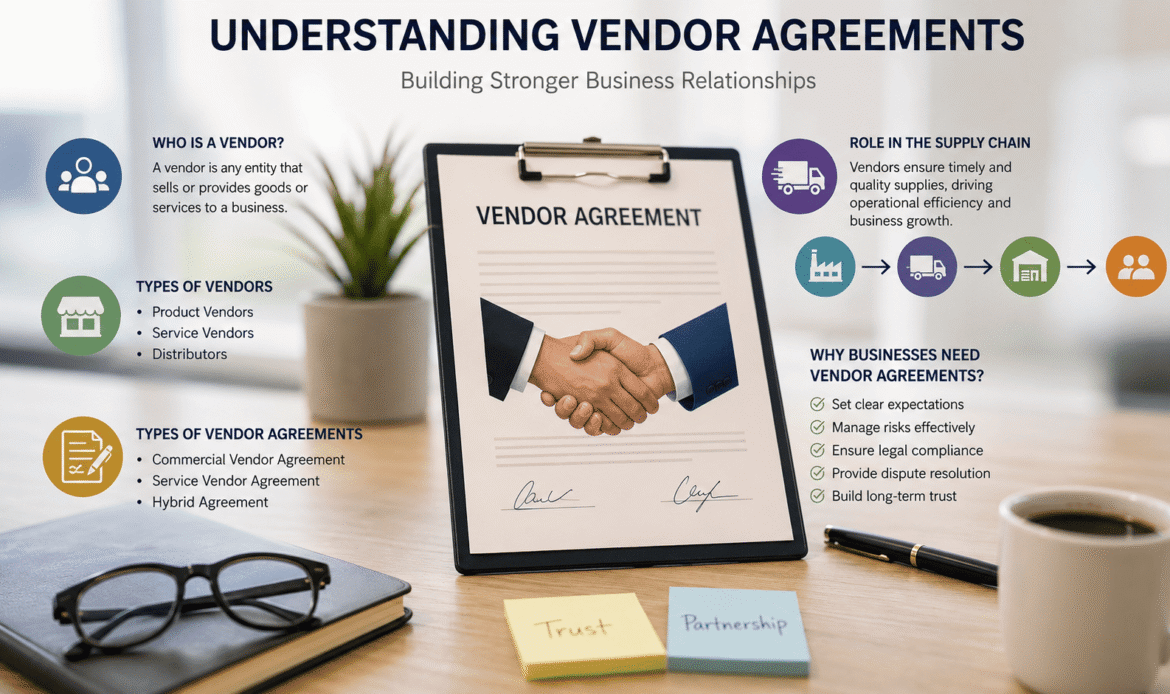
- Setting Clear Expectations: Specific language helps avoid confusion, leading to fewer conflicts and disputes.
- Risk Management: Legal clauses protect companies against potential liabilities and breaches.
- Compliance: Vendor contracts can provide assurances of compliance with industry regulations and laws.
- Dispute Resolution: A good agreement will include methods to resolve disputes amicably and promptly.
Key Legal Provisions in Vendor Agreements (India)
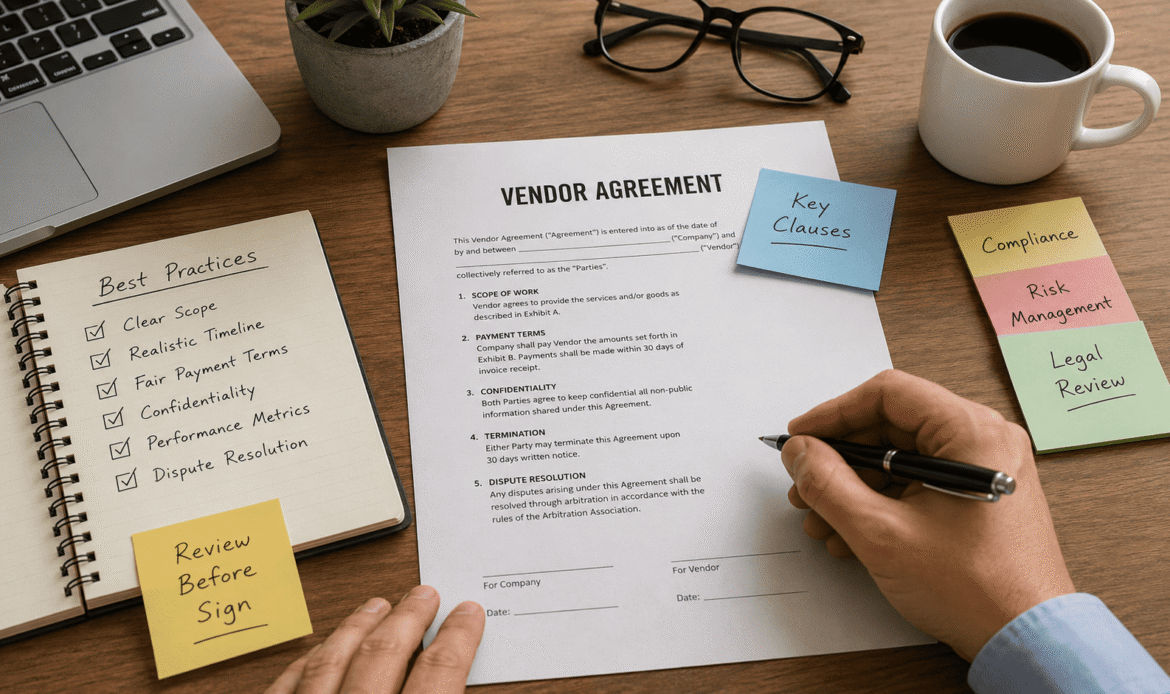
For your vendor agreement to be enforceable and comprehensive, it needs to include certain key legal clauses:
1. Scope of Work or Services
Establish clear lines of communication and expectations around specific deliverables (including specifications, timeline performance measures, etc.).
2. Payment Terms
Clearly describe the pricing structure and invoicing process, payment schedule, and penalties for delays.
3. Timelines For Deliveries & Performance Guidelines
Set delivery due dates and performance evaluation criteria.
4. Confidentiality and Non-Disclosure Provisions
Include confidentiality provisions to safeguard sensitive business information. For a deeper understanding of confidentiality and associated clauses, please Indemnity Clauses in India: Enforceability and Important Judgments.
5. Indemnity and Liability Clauses
Outline each party’s potential liability and indemnification provisions against third-party claims.
6. Termination Clauses
Define the terms for when each party can or can’t terminate the agreement with or without cause.
7. Dispute Resolution Methods
Add an arbitration, mediation, or litigation dispute clause.
Best Practices for Drafting Vendor Agreements in India
Vendor agreements can be complex and require customization to each business need. Here are some best practices:
- Identify Key Risks: Such as non-performance, delays, data breaches, etc.
- Use Simple Language: Do not use legalese so the terms are clearly understood by both parties.
- Verification of Legal Compliance: Ensure the agreement is legally compliant, including but not limited to the Indian Contract Act and the labor laws.
- Add Key Performance Indicators (KPIs): Include KPIs in service agreements to see how the vendor is performing.
- Tailor to Your Industry: Use specific terms that are appropriate for the industry and business in which you operate.
Vendor Agreements: How to Negotiate the Best Terms
When done right, negotiating can lead both parties to a beneficial agreement. Here are some tips for negotiating better vendor contracts:
- Identify vendor priorities: What makes sense for the vendor? Where do interests overlap?
- Price vs Quality: Do not get caught up in the price, stick with quality and reliability.
- Use the pull of long-term relationships: Offer long-term contracts to get better terms.
- Maintain the Bargaining Process: If certain terms can be amended, flexibility and compromise can lead to better overall deals.
- Suggested clauses: “Document Changes” — Every change that is negotiated needs to be documented and signed.
Most Common Legal Mistakes and How to Avoid Them
However, businesses can find themselves falling into traps while drafting vendor agreements, no matter how well-intentioned. Here are some common mistakes, and how to avoid them:
- Ignoring Termination Clauses: Never skip clear termination terms.
- Not Including Dispute Resolution Mechanisms: Specify a dispute resolution method to avoid costly litigation.
- Neglecting to Protect Your Intellectual Property (IP): Add clauses to protect your IP.
- Poor Data Protection: Observe data privacy and General Data Protection Regulation (GDPR) laws and apply relevant security measures.
Must Haves in Vendor Agreements for Compliance
In this case, compliance makes good legal practice. Here’s how to make sure you’re compliant:
- Comply with Contract Laws: The agreement must be compliant with the Indian Contract Act, of 1872.
- Factor in Tax Implications: Include provisions for GST, TDS, and other applicable taxes.
- Comply with Labor Regulations: If the agreement involves outsourced labor, ensure compliance with relevant labor laws.
- After that, address any applicable industry-specific regulations: Healthcare and IT, for instance, have specific types of regulations.
The Role of Legal Counsel in Vendor Agreements
Even just bringing in legal counsel to help assist in drafting the agreement can minimize the risk and help ensure that the agreement is thorough. Legal professionals can:
- Create Bespoke Agreements: Be able to draft agreements that suit the needs of your business.
- Premium Templates Review: Review templates as per legal requirements and industry standards.
- Mitigate Risks — Assess and respond to potential legal risks.
FAQ Section
Q1: What is the difference between a vendor and a supplier?
Vendors sell directly to customers, whereas suppliers deliver goods to vendors or businesses further up the supply chain.
Q2: Are vendor agreements legally binding?
Yes, vendor agreements, if properly drafted and signed by both parties, are legally binding.
Q3: Is it possible to terminate vendor agreements early?
Yes, but it may depend on the terms of the termination clause.
Q4: What is the impact if a vendor violates the contract?
The deal should provide remedies, such as compensation, or allow for contract termination.
Q5: Should small businesses use standard templates?
You may use templates, but they should be reviewed by a lawyer.
Q6: How do businesses handle disputes?
Dispute resolution clauses often prescribe either arbitration, mediation, or litigation.
Conclusion
Vendor agreements play an imperative role in protecting business interests, defining responsibilities, and ensuring seamless operations. This guide highlights the importance of understanding legal essentials, drafting clear agreements, and involving legal counsel to mitigate risks and establish successful vendor relationships.