Reviewed and Validated by: Pushkar, Founder & Managing Partner The Reserve Bank of India had released the Guidelines for Default Loss..
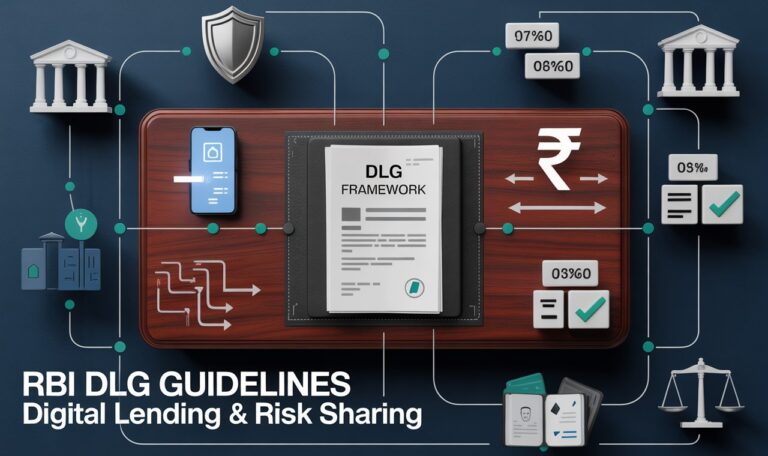


Reviewed and Validated by: Pushkar, Founder & Managing Partner The Reserve Bank of India had released the Guidelines for Default Loss..

Reviewed and Validated by: Srijan Jha, Advocate Drafting influencer contracts requires precise integration of advertising self-regulation obligations under the Advertising Standards Council..

Reviewed and Validated by: Aamna Munaima, Associate Introduction – Fintech in Corporate Finance The Fintech revolution has swept across every corner..

This article pertains to the recently released FAQs on Paytm Payments Bank by the Reserve Bank of India.

In India, the regulatory framework for fintech is currently fragmented, lacking a unified set of rules or norms that govern all fintech services. This fragmentation poses challenges in effectively regulating the industry since there is no comprehensive set of fintech laws. The primary regulatory agencies overseeing this sector in India include the Reserve Bank of India (RBI), the Insurance Regulatory and Development Authority of India (IRDAI), the Securities and Exchange Board of India (SEBI), the Ministry of Corporate Affairs (MCA), and the Ministry of Electronics and Information Technology (MEITY)

Through this brief article, we aim to provide a gist of the registration and licensing requirements for an entity engaged in peer-to-peer lending in India in addition to the prudential and reporting requirements in such respect.

In layman terms, a Derivative based contract is a contract between two or more parties whose value is based on an agreed-upon underlying financial asset, index, or security. Some common financial instruments used for this purpose are Futures Contracts, Forward Contracts, Options Contracts, and Swaps Contracts. These are secondary securities whose value is solely based (derived) on the value of the primary security that they are linked to which is known as the underlying assets.

Reviewed and Validated by: Shubham Dwivedi, Associate The Union budget is scheduled for Monday, February 1st and one of the key..
A lawyer reviews every enquiry — not a call centre. Corporate and employment law under one firm, retainer or matter-by-matter.

India's boutique corporate & employment law firm — partner-led advice for GCCs, MNCs, startups and enterprises. Protection with courage.
© 2026 Corrida Legal. All rights reserved.