Reviewed and Validated by: Kartavya Ostwal, Advocate Investment is a pivotal aspect of any startup or company. However, investor-founder disputes have become..



Reviewed and Validated by: Kartavya Ostwal, Advocate Investment is a pivotal aspect of any startup or company. However, investor-founder disputes have become..

Reviewed and Validated by: Aamna Munaima, Advocate 1. Introduction When founders consider how to write a term sheet, they usually see..

Reviewed and Validated by: Srijan Jha, Associate Introduction In 2023, a study by Tracxn reported that more than 64% of early-stage..

Reviewed and Validated by: Srijan Jha, Associate Introduction For a long-term, successful sustainable, innovation-fueled startup, seed financing plays a vital role..
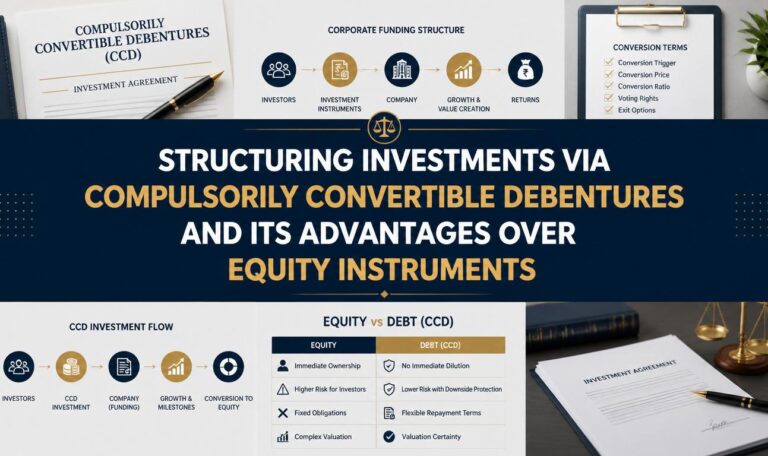
We are penning this article to give the readers a brief outlook on the potential advantages in respect of the structuring of an investment via compulsorily convertible debentures in comparison to other pure equity instruments.

Often used together, Private Equity (PE) and Venture Capital (VC) are different concepts pertaining to infusion of capital through equity purchase by investors. Thought to be similar concepts, PE and VC differ from each other in their basics. With the focus to invest in companies possessing ideas or expansion related plans or simply with a view of getting a profitable exit, citing the growth prospect of the investee companies, this article aims to explain the concept of PE and VC, along with laying down the differences between the concepts and finally explaining in brief, the legal mechanisms that govern PE and VC.

This article aims to explore the concept of drag-along and tag-along rights in India, examining their advantages, disadvantages, and legal implications. By shedding light on these rights, businesses and legal practitioners can better navigate the complexities of shareholder agreements and ensure alignment with Indian laws.