

Reviewed and Validated by: Richa Thakur, Associate
Introduction
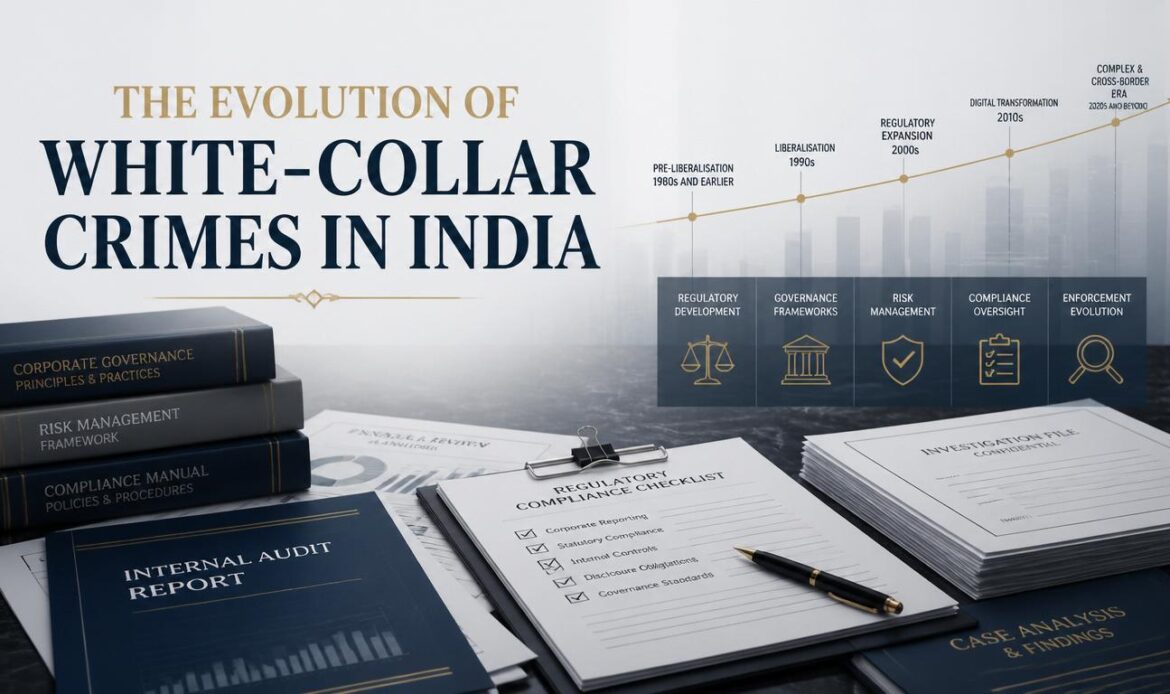
White-collar crimes in India have evolved significantly over the decades, reflecting changes in the economic, technological, and regulatory landscape. Understanding the evolution of white-collar crimes in India is crucial for addressing contemporary challenges in combating such crimes.
Early Instances of White-Collar Crimes
White-collar crimes have been present in India since the pre-independence era:
- Pre-Independence:
- Instances of financial fraud and corruption were documented even during the British colonial period. These crimes were often linked to the exploitation of resources and manipulation of financial markets.
- Post-Independence:
- The early decades after independence saw several high-profile cases of corporate fraud and embezzlement, often involving public sector undertakings and government officials.

Modern Developments
The nature and complexity of white-collar crimes have evolved with technological advancements and economic liberalization:
- Technological Advancements:
- The rise of digital technologies has led to new forms of cybercrime, including hacking, phishing, and online fraud. These crimes often transcend national boundaries, complicating enforcement efforts.
- Increased Complexity:
- Modern white-collar crimes often involve sophisticated schemes and the use of shell companies, offshore accounts, and complex financial instruments to evade detection.
Read another article: Legal Consequences of Non-Compliance with Minimum Wage Regulations
Regulatory and Legal Evolution
The regulatory and legal framework in India has also evolved to address the changing nature of white-collar crimes:
- Changes in Laws and Regulations:
- New laws and amendments have been introduced to tackle emerging threats. For instance, the Prevention of Money Laundering Act (PMLA) was enacted to combat money laundering, and SEBI regulations have been updated to address new forms of securities fraud.
- Strengthening Enforcement Mechanisms:
- Regulatory bodies have enhanced their enforcement mechanisms, including increased collaboration with international agencies and the use of advanced technologies for surveillance and investigation.
Conclusion
The evolution of white-collar crimes in India highlights the need for continuous adaptation and innovation in regulatory and enforcement strategies. Understanding historical trends and modern developments is essential for effectively combating these crimes in the future.
