

Reviewed and Validated by: Pushkar Thakur, Founder & Managing Partner
As a Corrida Legal lawyer, I am routinely engaged in advising startups, and during one of the recent conversations with an FMCG startup, I was made to realize that whilst there are a lot of legal articles on the requirements for startups in India, a lot of them do not clearly explain what is actually required and why, and only give out the legal regime, which is not only incapable of giving a complete picture, but also somewhere confuses the reader. We understand that when a person starts a particular venture, the primary focus is and should be on making the business successful, and legal as it should act as a support function and not as a hindrance.
In a similar vein, I thought what better than to create this article enunciating the specific legal requirements that a startup will require in India. We have accordingly covered not only the core legal requirements such as prevention of sexual harassment or an employment contract, but also given a clear insight on all the aspects that will be required starting from the operational bits covering vendor contracts, employment agreements, service rules, the protection of the brand, the vendor agreements, but also the web-based documents like platform terms, privacy policy, the documentation required for confidentiality, and equal opportunity as mandated by the Rights of Persons with Disabilities Act in India. We have also covered the scope of what a marketplace business would require along with a brief insight on the statutory registrations, CA and secretarial requirements, and the overall effect of the business model on the legal requirements.
Operational readiness
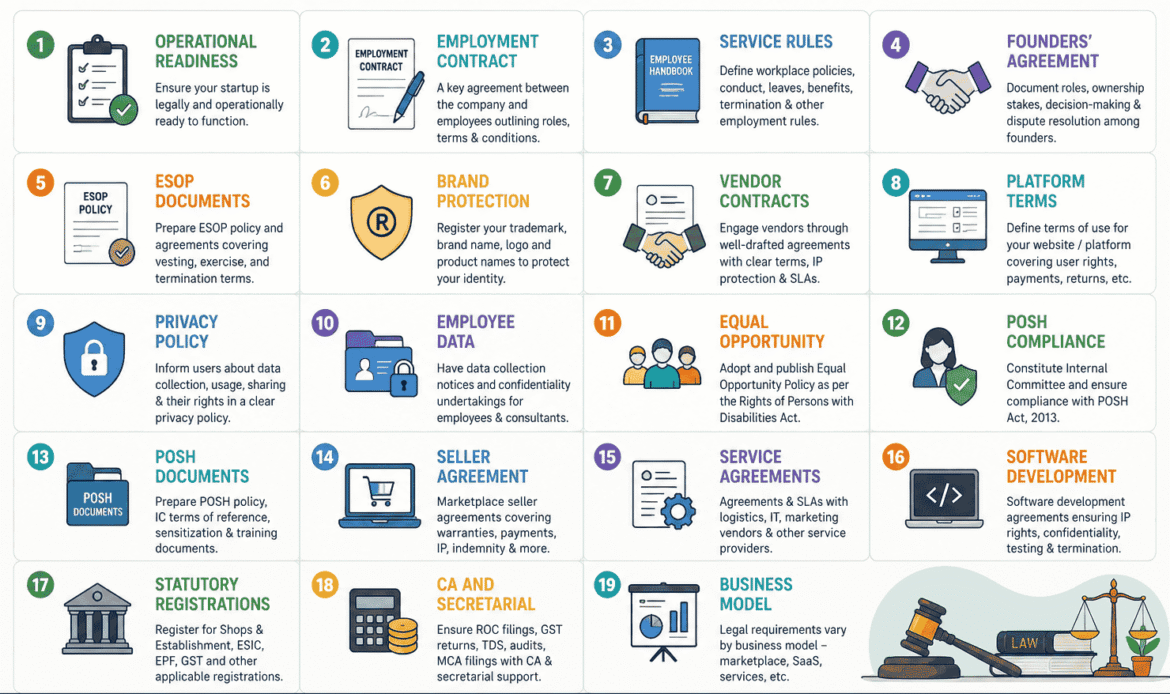
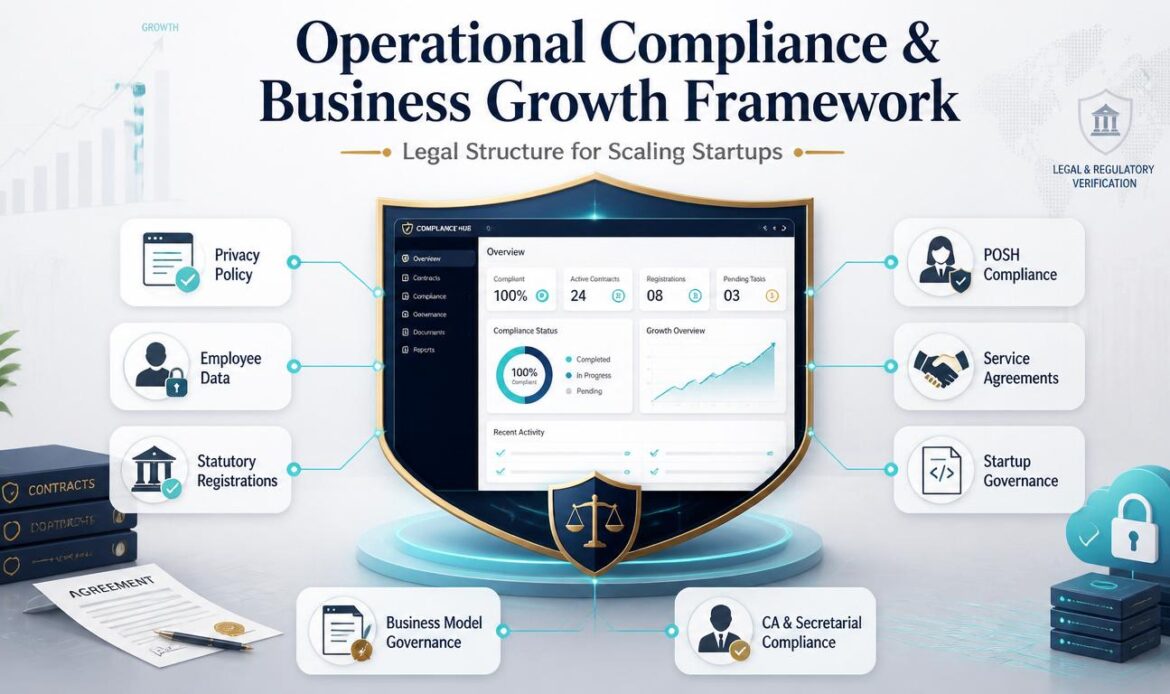
A startup in India should not treat incorporation as the end of legal structuring. Once the entity becomes operational, it should put in place its employment documents, platform documents, operational contracts, data notices, POSH governance, intellectual property protection and basic statutory registrations, depending on the nature of its business. A detailed look on the various aspects mentioned in this article will equip the reader with the precise set of documentation and processes and controls and the registrations required for the startup to be operationally ready and compliant.
Read another article: Hybrid Work Policy in India: Practical HR and legal Drafting Guide for Employers
Employment contract

The first set of documents for a startup will usually be employment related. The employment contract is the key contract to be executed between the company and its prospective employees. Where a senior management professional is being onboarded, the employment contract may need to be tweaked to reflect the seniority of the role, the operational responsibilities and the safeguards required by the company. A key point to be noted here is that the employees of a startup have a different set of exposure, especially with respect to social media, client data, etc., and the same need to be safeguarded accordingly.
Service rules
A company should also prepare company service rules or an employee handbook. The service rules are a detailed set of rules which prescribe key aspects of employment such as working hours, maternity leaves, statutory benefits, workplace code of conduct, additional grounds of termination, exit formalities and related requirements. These rules can be made available to employees in the form of an employee handbook and may include policies such as exit policy, IT hardware usage policy, social media usage policy, leaves policy, attendance policy and dress code policy. Now that we have spoken about the rules, we also need to note that startups generally have a young demography of employees joining them. Even a simple change of nomenclature from service rules to employee handbook makes a world of difference for an employee to feel acclimatized. Another point that we emphasize on at Quirida Legal is that we draft our documents in a welcoming manner and not in a manner which seems rather stentorian to a reader.
Founders’ agreement
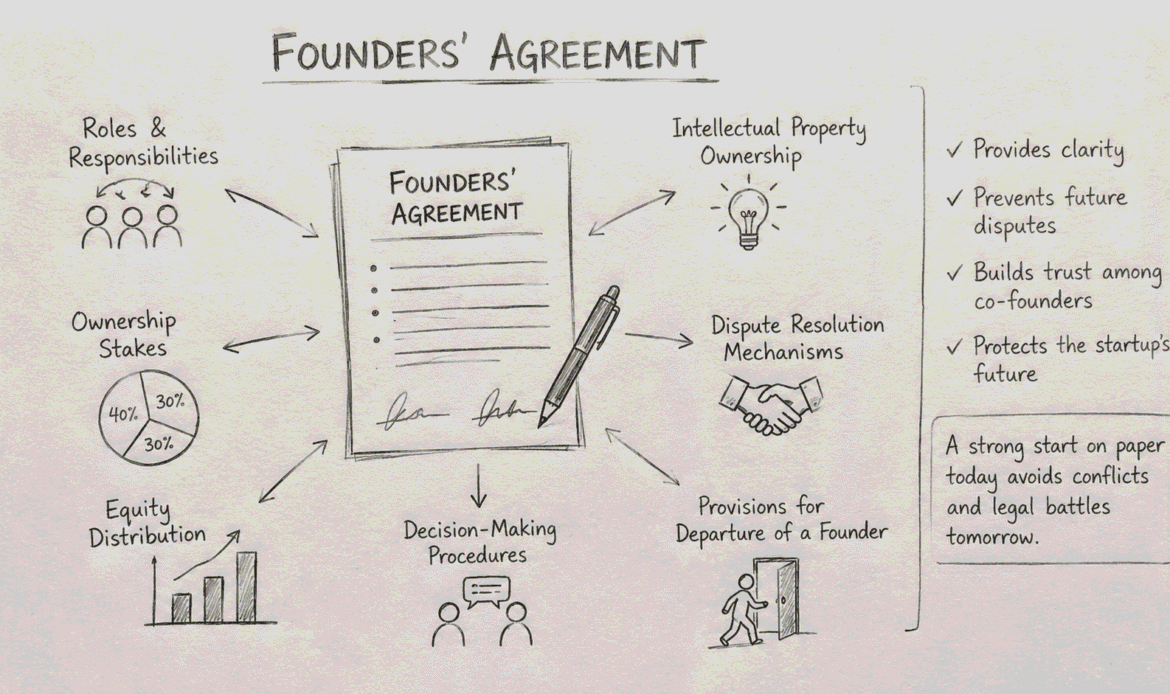
Founders should also consider a founders’ agreement. Such an agreement can record the roles, responsibilities and ownership stakes of each founder and can address equity distribution, decision-making procedures, intellectual property ownership, dispute resolution mechanisms and provisions dealing with the departure of a founder.
This is useful even where the venture is not immediately looking for funding, because it provides clarity and reduces future disputes between founders. What startups may start as a combined effort from two very close friends can end up being a litigated experience if the basics with respect to the aspects mentioned earlier are not covered adequately. Interestingly, no one starts a venture to have a dispute in it with his own co-founder.
ESOP documents
Where the startup proposes to grant ESOPs, the documentation should be prepared before such grants are made. The documents should cover a comprehensive ESOP policy and an ESOP agreement to be executed with the employees being granted ESOPs as ESOPs cannot be granted without these documents. These documents, whilst of course being legally compliant with the company’s share capital and debenture rules, etc., and the relevant provisions of the Companies Act 2013, need to cover the important aspects like vesting schedule, exercise period, and the grounds for termination of grant to have complete clarity and for future safeguarding the startup.
Brand protection
The brand name and logo should also be protected at an early stage. Trademark registration helps ensure that no other company or venture uses the brand name for the purposes for which the startup has registered its brand name and logo. Product names and logos that the business is seeking to create and protect should also be considered for trademark protection. We are sharing a link to one of our articles titled Trademark Classes in India: Concept and Classes to give you a clear insight on the trademark classes that are applicable in India: https://corridalegal.com/trademark-classes-in-india-concept-and-classes/
Vendor contracts
Where the startup engages consultants, retainers, vendors, technology service providers or other third party service providers, it should not rely only on informal e-mails or commercial understanding. Consultancy agreements, master vendor services agreements, service level agreements, service agreements, vendor agreements, retainers, non-disclosure agreements and partnership agreements may be required depending on the operating model. These documents should contain clauses necessary for safeguarding the company’s commercial and legal rights. What has been observed by us at Corrida Legal is that a lot of vendors start their operations well, but through time either go slow on their execution or straightaway start creating situations which are more troublesome for a startup than beneficial. We accordingly safeguard the timelines of delivery, the execution, the payment, and also the confidentiality, intellectual property, and client data of our startups to ensure risk minimization and disputes.
Platform terms
For online businesses, website and platform documents should be put in place at the beginning. Terms and conditions should be drafted keeping in mind the business interests and regulatory requirements of the platform. They may also safeguard the content, business offerings, website design, layout, payments, refunds, returns, exchange, warranty, guarantee, delivery, shipment and modes of payment.
Privacy policy
The privacy policy should cover the processing of personal data and sensitive personal data. In certain platform models, the documents also refer to appointment of a grievance officer for addressing complaints and requests pertaining to personal or sensitive personal data. For businesses dealing with users across jurisdictions, the privacy policy may need to be drafted more comprehensively, keeping in mind the nature of user data, the category of users and the manner in which the platform processes and shares information. A peculiar point I have observed is that a lot of organizations copy each other’s terms and conditions whilst completely disregarding the fact that this does them more harm than good because not only legally these terms are not meted for the requirements of a particular startup and in compliance with the applicable laws, including the Consumer Protection e-commerce rules of 2020, but also create a concern from a Search Engine Optimization perspective because of copied text which Google downranks in its results.
Employee data
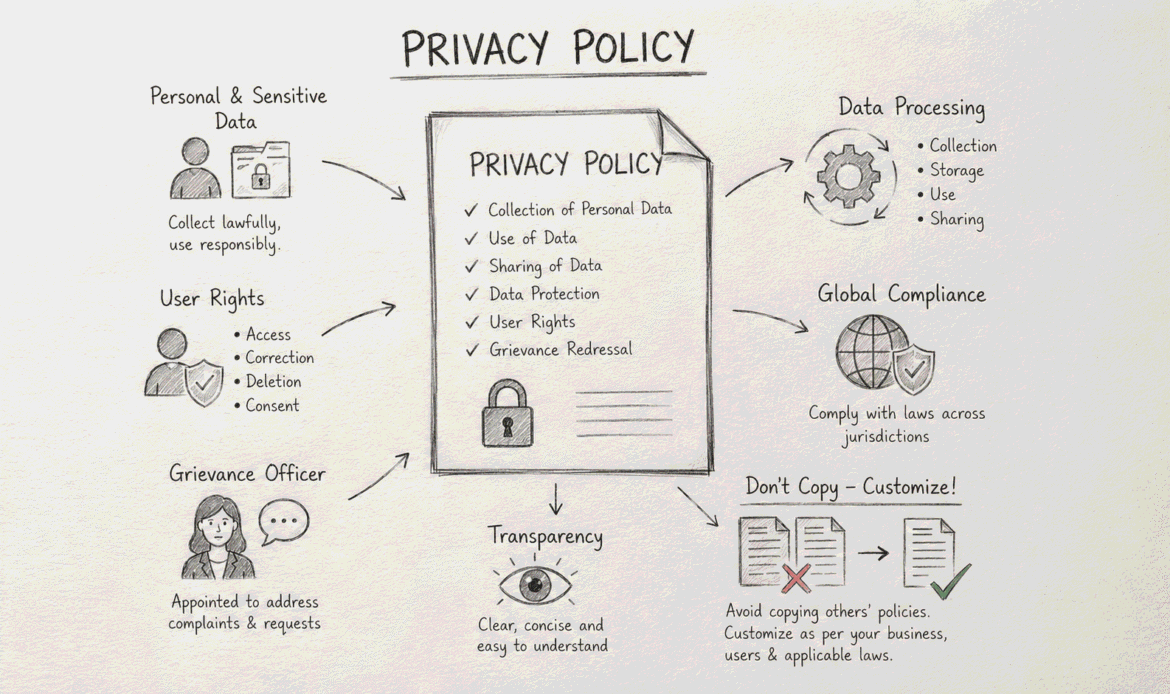
Startups should also prepare employee data and confidentiality documents. A personal information collection notice is required to be provided before collection of employee personal data or sensitive personal data. It should set out the scope of personal data collection, the purpose of processing and the parties with whom such data may be shared. Where employees or consultants have exposure to confidential data, intellectual property or client information, a confidentiality undertaking should also be prepared to safeguard the company and its clients. Not only does a simple document like a confidentiality undertaking safeguard the confidential data or a document like a personal information collection notice covers the processing of personal data, but such documents also serve as reminders and deterrents for all stakeholders with respect to the importance of such data, especially for a startup which is building its operations from scratch.
Equal opportunity
The equal opportunity policy should also be considered at the start of operations.Treat the equal opportunity policy as a basic employment-linked document which is legally required to be published on the company’s website or at a conspicuous place in its premises, depending on the applicable State rules. The same may also be accompanied by a board resolution for adoption of the policy. Such documents, while being a legal requirement under laws such as Rights of Persons with Disabilities Act, also demonstrate the startup’s inclusive approach towards inclusion of talent irrespective of their gender, caste, creed, religion, etc.
POSH compliance

POSH compliance should not be left for a later stage. The Sexual Harassment of Women at Workplace (Prevention, Prohibition and Redressal) Act, 2013 requires every company with 10 or more employees to constitute an Internal Committee to address sexual harassment related issues and conduct trainings. The documents also treat early constitution of the Internal Committee as a good governance practice once the company starts operations. Whilst the law requires formation of an internal committee upon and POSH compliance upon reaching 10 employees, it is always advisable for any venture, be it an established MNC or a fledgling startup, to have the mechanism in place from day one of its operations here in India.
POSH documents
The POSH documentation may include formation of the Internal Committee, sensitisation to management or senior officials on regulatory requirements, preparation of the POSH policy, preparation of Internal Committee terms of reference and training of both Internal Committee members and company employees, including part-time staff, on compliance with the POSH framework.
Seller agreement

If the startup is an e-commerce or marketplace business, it should also prepare seller and operational contracts. A marketplace seller agreement may contain seller warranties on quality assurance and compliance with applicable laws, payment clauses specifying the commission structure, protection of intellectual property rights, trade secrets, copyright and trademark usage, duration, termination, confidential information, indemnity, product standards and genuineness. A peculiar point to note here is that there are specific requirements with respect to marketplace seller agreements in the Consumer Protection E-Commerce Rules 2020.
Service agreements
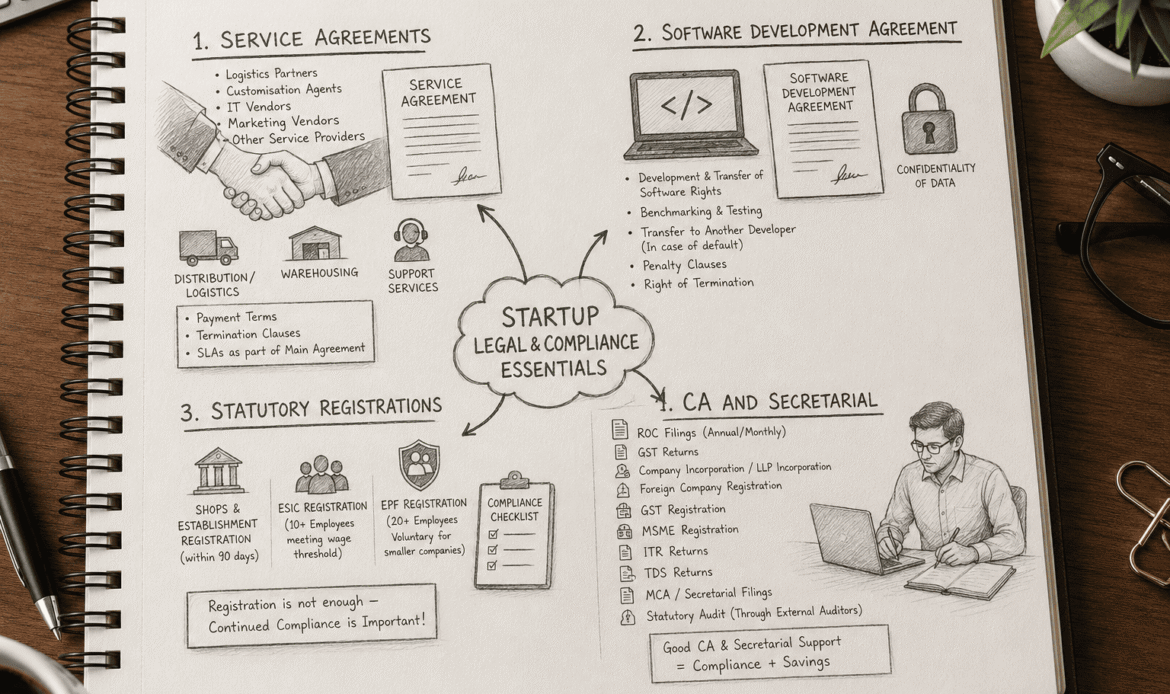
A startup working with logistics partners, customisation agents, IT vendors, marketing vendors or other service providers should also put in place service agreements and service level agreements. These agreements may provide for the provisioning of different types of services, including distribution, logistics, warehousing or technology services, and the service level agreement may become part of the main agreement once signed. On the flip side, a startup may also be required to provide such services if it is a logistic partner, customization agent, IT vendor, etc. So in this regard, the paradigm changes and we need to adequately safeguard the payment terms and the termination requirements that are there.
Software development
Where software development is central to the business, the software development agreement should be treated as a key document. The document should ensure proper development and transfer of software usage-related rights and may include provisions on benchmarking, testing, transfer of development services to another developer in case of default, penalty clauses and the company’s right of termination. It is evident in the field of AI that the documentation will need to adequately capture the maintenance of confidentiality of the startup’s data by the software developer.
Statutory registrations
Once the business becomes operational, the company should also review its statutory registrations. Such registrations include shops and establishment registration, ESIC registration and EPF registration. The shops and establishment registration is referred to as a certificate to be applied for within 90 days from commencement of work under state wise laws such as the Delhi Shops and Establishments Act, 1954. Another requirement is of ESIC registration for companies having 10 or more employees drawing wages up to the specified threshold and EPF registration for companies having 20 or more employees, with smaller companies being able to register voluntarily. A lesser known aspect which founders often ignore is that it is not only about the registration but continued compliance with these laws as well. You may peruse the below mentioned section titled CA and Secretarial for more information on this.
CA and secretarial
A startup may also require chartered accountancy and secretarial support. Such support shall cover filing of annual or monthly ROC-based and GST returns, formation or incorporation of companies, incorporation of LLPs, registration of foreign companies, GST registration, MSME registration, ITR returns, TDS returns, MCA or secretarial form filings and statutory audit through external auditors. In my past 15 years of experience as a corporate and employment lawyer, and including the experience that I have had for my own venture, a good chartered accountant does not only do the requisite compliances, but also helps ensure that there is maximum savings achieved by the startup whilst being legally compliant.
Business model
The legal requirements of a startup will finally depend on the business model. A marketplace may need marketplace seller agreements, platform terms, privacy policy, seller/vendor policy, disclaimers and NDAs. A technology business may need software development agreements, SaaS agreements, software licence arrangements and data-related documents. A services business may need employment contracts, consultant agreements, vendor agreements, service level agreements, confidentiality undertakings and employee data notices. What I have observed is that startups focus on a short horizon with respect to their business models and somewhere put the aspect of whether they would want to scale, to what extent, and whether they would want to go to international territories, as examples, on the backburner. This is where we bring our experience and expertise of having handled startups across the industry on what best mode and modality of business setup and legal compliances that they should be following.
Conclusion
A simple way to sum this article up is to highlight the fact that a ready today leads to a safer tomorrow, especially in respect to legal requirements and good-to-haves for a startup. I have routinely observed that startups who have shortchanged on this initial piece of governance have often had to pay a higher price for the same in future, either by way of regulatory notices being issued or there being disputes between founders which has been required to be taken to court and has taken years to resolve, extreme financial losses due to loss of data for tech startups, or simple non-conformity of the requirements by a service provider which leads to inordinate delays for startups, especially the ones in the food industry.